
Why I’m Fighting for Equal Access to Clinical Trials
As a European citizen and cancer patient participating in a clinical trial, I’ve seen firsthand how research creates opportunities where none existed before.
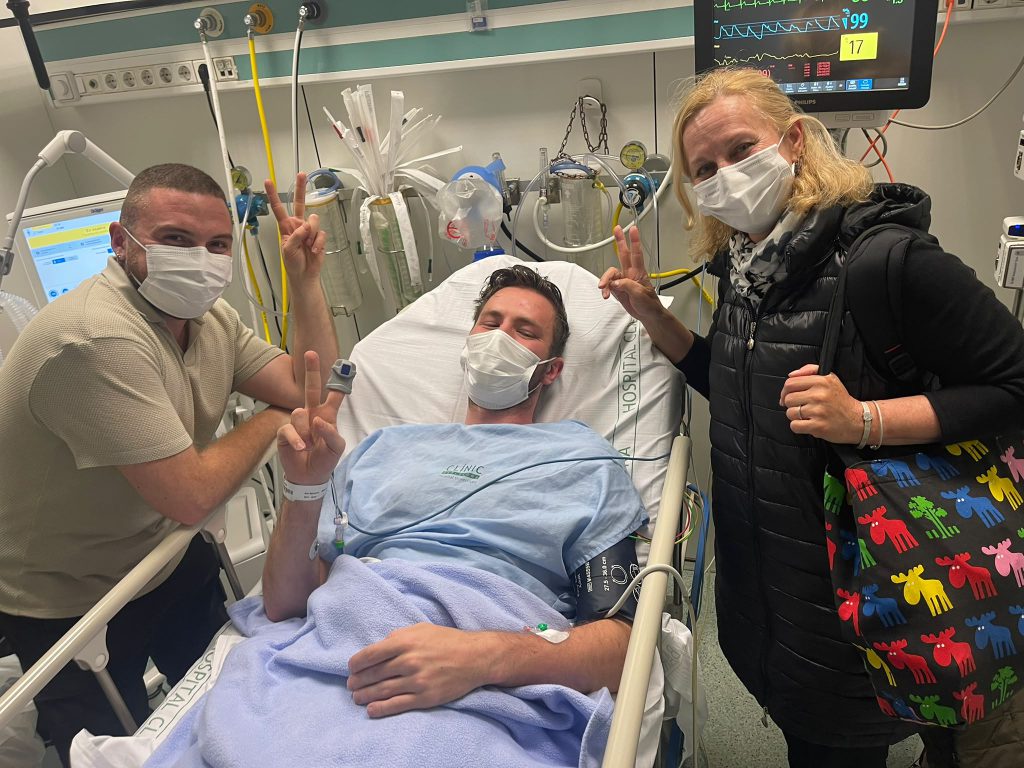
In April 2024, I got diagnosed with a brain tumor. It happened almost by accident. I’d ended up in Barcelona, went to the ER for a bad headache — the hypochondriac in me finally right about something — and landed at one of the best hospitals in the world. It turned out I had a rare mutation, the kind where a revolutionary new drug happened to have a clinical trial running. A trial gave me options I wouldn’t have had otherwise — a chance my doctors and I could actually act on.
In the three years since, it’s been two brain surgeries, a biopsy, rounds of chemotherapy and radiotherapy, losing my hair and watching it grow back, and losing feeling in my left leg and arm — small things, like not being able to feel my own slipper slip off while walking, becoming part of daily life. The fight is still very much ongoing.
But here’s what I keep coming back to: I didn’t win any genetic lottery. What I did have was family and friends who showed up — some flying in from other countries, some sitting with me through every round of treatment — and access to a trial that gave me a real shot. That combination is what got me here. And none of it was guaranteed by anything except luck.
That’s the part that doesn’t sit right with me. A patient in one EU member state might have access to a groundbreaking trial that a patient with the exact same diagnosis, just a few hundred kilometers away, simply cannot reach. Not because the treatment doesn’t exist — but because the infrastructure to connect patients to trials across borders doesn’t exist either.
I ended up here by chance. That’s not something a healthcare system should be able to say about who lives and who doesn’t.
If this resonates with you, sign up to be notified when official signature collection opens — and share your own story with us.